Sometimes we only think we have understood. Different situations expose the gap.
Sometimes we speak very decisively, yet no one knows whether we have made a proposal, asked a question, refused something, or simply expressed annoyance. Sometimes an idea works only in a familiar example. Another person hears something quite different from what we meant to say. And once the familiar order changes, the old explanation no longer shows what must be preserved.
This note is the growing centre of the series. It will gather twelve ways of talking about the signs not as personalities, but as real-life situations in which the same work of Mercury appears. Someone has noticed an important difference. Now it has to become clear to another person: in a distinct message, in a new example, among people with different interests, or in changed circumstances.
So far, we have explored four situations: a clear message that gives another person something to answer, the next concrete case, a meeting between people with different ideas of what matters, and a change in familiar conditions.
In Aries, our words must leave the other person with something they can respond to. In Virgo, another example is placed on the table. In Libra, the person across the table cares about something else. In Scorpio, familiar conditions stop helping.
These are no longer four sets of character traits. They are four real-life scenes in which we can see whether an explanation worked.
There will eventually be twelve such scenes—one for each sign. We began with three neighbours and have now added Aries, opposite Libra. Four scenes are not enough to describe Mercury as a whole, and they give us no licence to invent the remaining eight in advance. Each new note will add another column here, so the individual pieces do not have to reproduce the entire table.
Every time, it matters what we are using as the basis of our reasoning. We did not begin with adjectives such as “decisive”, “precise”, “diplomatic” and “resilient”. We asked how the real-life situation had changed while the important distinction stayed the same: there was now a distinct message for another person to answer; the example had changed; different interests had met; familiar conditions had stopped helping.
Aries: say it so an answer can follow
Someone writes in a work chat, “We need to decide once and for all whether we are launching.” The sentence sounds confident, but one person hears a complaint, another a request to hurry, and a third assumes the decision has already been made.
A clear step works differently. The speaker says what they are proposing, whom it concerns, and which reply can change what happens next. The other person may agree, refuse, ask for clarification or suggest another option—and they respond to the actual proposal, not its tone.
In Aries, the question is: “After what I just said, does the other person genuinely have something to respond to?”
Failure disguises itself as decisiveness: someone is sure they have “said everything”, while the others still do not know whether it was a question, a decision, a request or merely a comment. There is a subtler pretence too: an answer seems to be requested, but everything will happen in exactly the same way whatever anyone says. That is a monologue with a question mark, not a message addressed to another person.
Virgo: show it in a real case
A teacher has worked through a problem. The pupil repeats the rule correctly. Have they understood it?
Give them a problem that was not on the board. If they identify for themselves the detail that makes the old answer fit this case but requires a different answer in another one, their understanding has become visible.
In Virgo, the question is: “Your own case will show whether this fits. Which detail changes the decision here?”
The new example does not have to confirm the rule. Sometimes the best sign of understanding is saying at the right moment, “No, this does not apply to your case—and here is why.”
Failure is visible at once too: someone retells the explanation confidently, but once the names, appearance or irrelevant details change, they no longer recognise the same difference. They memorised the model answer.
Libra: turn a requirement into a shared measure
Now it is not a new example sitting opposite us, but another person. They care about different things, so they notice different consequences in what we say.
Someone says, “We need a crisis-ready plan.” The owner thinks about keeping the business running. The safety specialist thinks about protecting the data. The team thinks about being able to cope without one irreplaceable person. Everyone agrees with the attractive phrase, but so far they have commissioned three different things.
In Libra, the question is: “How will we all know that the requirement has been met when each of us cares about something different?”
The plan must say what has to be preserved, what may be sacrificed in an emergency, and what condition means the work must stop. The people involved may argue about priorities and do not have to share the same preferences. But after the conversation, everyone should understand the same standard and what it means for them personally.
Failure looks gentler here: everyone nods, then acts on their own version of “reliable”, “soon” or “reasonable”.
Scorpio: do not lose what matters when everything changes
Even a clear rule may live only in the room where it was explained. A real breakdown does not look like a training exercise: the familiar screen is gone, the right person is unavailable, events come in a different order and there is less time.
In Scorpio, the question is: “If everything goes off plan, will we still know what to watch for and when the old path must be abandoned?”
Memorising one action is not enough here. The choice itself must be practised. A person has to stick with the original decision despite irrelevant noise—and abandon it if the key detail on which it depended has changed.
Failure appears once rehearsal is over. A person either repeats the familiar action where it no longer helps, or throws away sound understanding merely because the situation looks unfamiliar.
The growing map of the series
An individual note needs one vivid scene. Here we can see all the versions explored so far side by side. The questions in the left-hand column will remain the same, while each new sign will receive a column of its own.
| Question | Aries | Virgo | Libra | Scorpio |
|---|---|---|---|---|
| Main question | Does the other person know what they are answering, and will their reply affect what happens next? | Can another person show for themselves where this applies and where it does not? | Can people with different interests use one standard? | Will the aim survive when the familiar path stops working? |
| Who it is for | The person whom the proposal, question, announcement or refusal concerns | The person facing the next concrete case | People who care about different things but have to make one shared decision | The person who will have to act after the familiar conditions change |
| What counts as a new case | The other person's reply: agreement, refusal, clarification or a counterproposal | An unfamiliar example; it may look nothing like the original | The same question seen from another side, where benefit, cost and risk are understood differently | A situation in which the familiar clue or the old route is no longer available |
| Which detail matters | Whether it was a proposal, question, announcement or refusal; whom it was addressed to; and what the answer will change | The one that makes the answer right here and different in the other case | The one without which shared words conceal different standards and different consequences | The one that separates a replaceable route from the aim and shows when the old answer no longer works |
| How failure disguises itself | The message sounds decisive but is taken as a mood; or an answer is requested even though nothing depends on it | Someone repeats the rule confidently but cannot recognise it in a new case without a prompt | Everyone nodded, but each person left with their own version of the agreement | Someone repeats the old route when it no longer leads to the aim, or loses the aim along with the route |
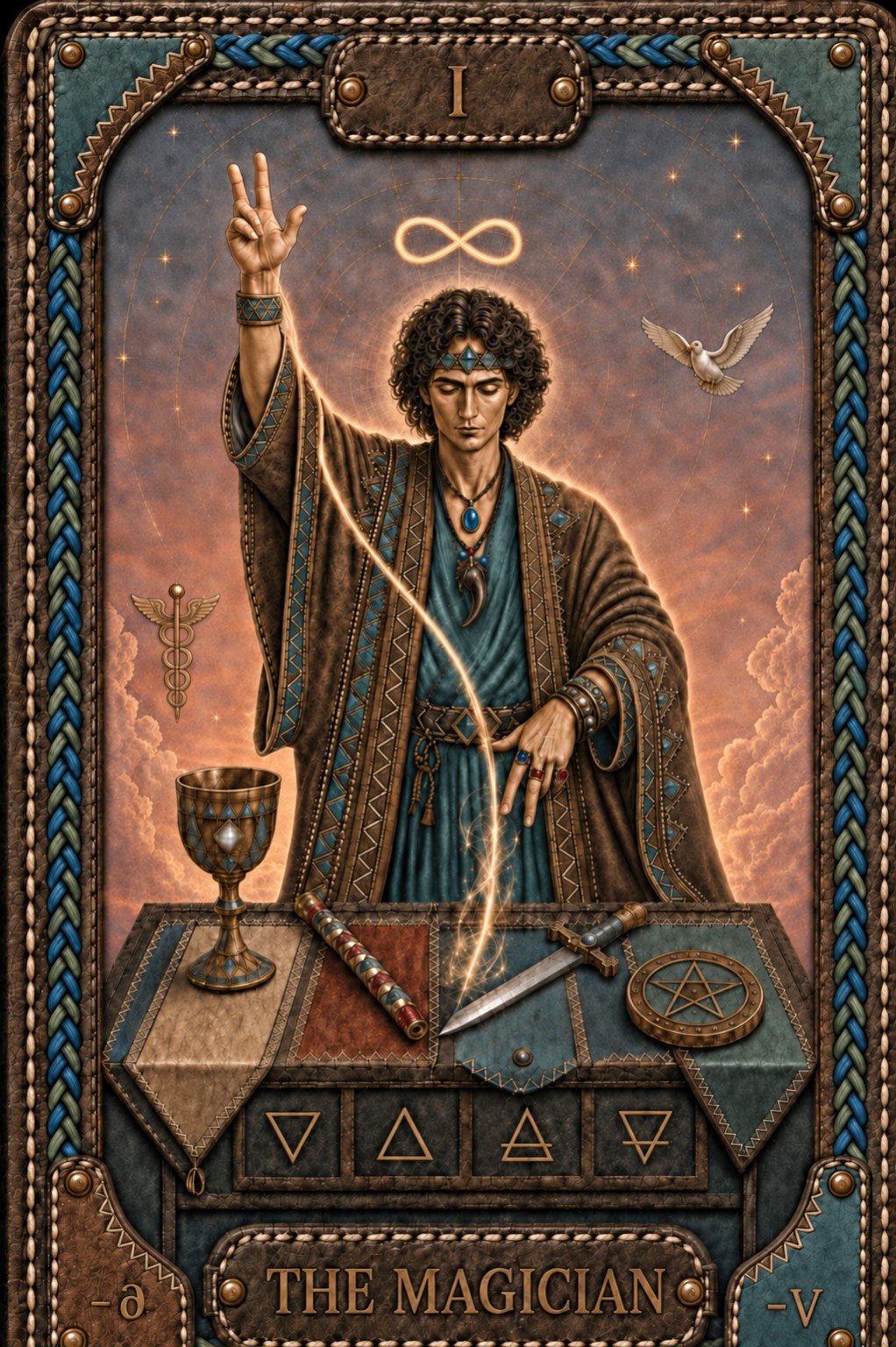
The Magician stays on the cover of this note because the comparison is about one piece of Mercury's work. On the covers of the individual notes, the Emperor, Hermit, Justice and Death take his place: the signs themselves now distinguish the real-life scenes.
Three attractive formulas in four real-life scenes
As long as a phrase merely calls up an appealing picture, nothing can be built from it. In Aries, it becomes a distinct proposal, question or refusal that another person can genuinely answer. In Virgo, its meaning becomes visible in a concrete case. In Libra, it becomes a requirement: we know in advance how success will be recognised and what will count as failure. In Scorpio, it must remain useful after circumstances change.
“An exclusive offer”
The client may mean access by invitation only. The designer may mean a distinctive look. The salesperson may mean a high price.
In Aries, someone finally makes the offer itself: they name the people being invited and ask each of them to accept or decline. In Virgo, the meaning of its exclusivity becomes visible in a specific design and sales process. In Libra, everyone agrees on how exclusivity will be recognised: the offer is available only to people who receive a personal invitation and does not appear in the public catalogue. In Scorpio, the platform changes or the budget shrinks: will only invited people still receive the offer, or will everything anyone called exclusive disappear along with the expensive packaging?
“A conflicted protagonist”
The writer imagines a person torn between two things they genuinely value. The actor interprets it as sudden mood swings. The editor fears an inconsistent plot.
In Aries, the writer proposes one particular version of the next scene, and the actor and editor can accept it, reject it, or show which of the two reasons it erases. In Virgo, the conflict becomes visible in one new scene. In Libra, the writer, actor and editor agree on one shared measure: the protagonist makes different choices not at random, but because two real reasons come into conflict. In Scorpio, this understanding has to hold under pressure, when the usual compromise is impossible: the protagonist must not suddenly forget one of the reasons they had been choosing between.
“A crisis-ready system”
To the owner, this means keeping the business running; to the security team, keeping the data safe; to the wider team, being able to act without one irreplaceable person.
In Aries, when the failure begins, someone clearly announces the first step: which backup route to take, who is responsible for the data, and which reply would make them change that decision. In Virgo, one real failure is worked through. In Libra, the requirements hidden inside “crisis-ready” are brought into the open and put in order. In Scorpio, the main service, the manager and the time buffer all disappear at once. That is when we see whether the earlier understanding helps people choose what to preserve, what to sacrifice, and when carrying on is more dangerous than stopping.
The same attractive phrase can now be tested with four questions: who is proposing it now and what answer do they expect; what does it look like in a real case; do people who care about different things understand the condition in the same way; and will it remain useful if the familiar plan falls apart?
Are these skills, or something else?
It is more accurate to call them real-life settings for understanding. A setting is defined by the situation, not by the person: this is where a weak point in our thinking may show itself. A skill develops when someone learns to handle that kind of situation successfully again and again.
- For Aries, turn a thought into a proposal, question or refusal and see whether the other person can answer that exact thing.
- For Virgo, change the examples and ask for the decisive detail.
- For Libra, bring in people with different interests and ask how each of them will recognise that the requirement has been met.
- For Scorpio, safely remove familiar clues, change the order of events and introduce an unforeseen variation.
Someone can cope brilliantly in one setting and fail in another. A teacher may show the rule through ten examples yet miss that the cost of a mistake is entirely different for the pupil. A team may agree on the standards perfectly, then clutch at instructions written for a screen that no longer exists when the first breakdown comes. Someone may understand a situation with great subtlety yet express their thought in a way that leaves everyone wondering whether an answer is expected or they were merely thinking aloud.
Why these formulas feel true to life
Each can be recognised without astrology.
In one scene, a person has to say exactly what they are proposing and what kind of answer they expect. In another, a new case follows the explanation. Elsewhere, people with different interests have to make one decision. In a fourth, the familiar order changes and the old method stops helping. We can watch what follows and ask whether it worked.
A sign is more useful here as the real-life setting for the same understanding than as an adjective attached to a person. Not “What are they like?” but “What has changed in this scene, and what does that demand from the explanation?” This is only one way of reasoning about the signs—the one we are developing in this series.
That is also what makes the approach more humane. A mistake stops being a defect of character. The speaker is not “weak-willed”—perhaps they simply failed to separate a proposal from a wish or a question from a reproach. The pupil is not “stupid”—the example they were shown was too narrow. The other person is not “undiplomatic”—what they heard first was the risk they themselves would bear. Someone under stress is not “weak”—they were taught to repeat a route, not to recognise a closed road.
Where the metaphysical gloss ends
“Decisive Aries”, “analytical Virgo”, “diplomatic Libra” and “insightful Scorpio” create a mood, but explain every outcome in advance. The loudest statement may still leave another person with no clear way to answer. A meticulous person can drown in detail and miss the decisive difference. Perfectly polite people can walk away with incompatible expectations. A dark tone tells us nothing about whether knowledge will help in a real breakdown.
A useful formula works differently. It tells us in advance what success and failure will look like:
- a clear message—the other person can answer the substance of it, or has merely picked up the speaker's mood;
- a new example—recognised or not;
- different interests—one shared standard or several hidden versions;
- changed circumstances—the person still knows what to choose, or falls back on blind repetition.
With criteria like these, it becomes harder to declare every outcome a success after the event.
When this becomes the theme of a period
This also makes the game of tracking periods through changes in the sky more interesting.
There are times to stop talking about a possible step and clearly propose, ask or refuse—so that the other person's reply genuinely matters. There are times to watch whether we can show, in another example, what really got through to us. There are times to notice that people hear the same phrase through different ideas of what matters, and to build a shared standard for a decision. And there are times to find out whether that standard will still help if everything goes off plan.
Different interpretations are not necessarily a problem. Often there is no problem precisely because people can understand words differently and their decisions never collide. But sometimes it becomes the theme of the moment—the “vibe”: different meanings begin to affect the same deadline, route, purchase or risk.
The sky guarantees nothing here. It offers a question that may be interesting to follow.
In short
Aries: say it so the other person has something to respond to and their reply matters. Virgo: show it in another example. Libra: turn different demands into a clear measure for a shared decision. Scorpio: do not lose sight of what you understood when the familiar path closes.
More simply still: after you speak, the other person knows what they are responding to; the explanation fits the case at hand, makes sense to someone with different priorities, and remains useful if everything goes off plan.